 Read more
October 17, 2018 | Groups of Persons
Herbert Brücker
A good 70 percent of refugees in Germany come from eight non-European asylum seekers' countries of origin. Their integration into the German labour market has increasingly gained momentum in recent ...read more
 Read more
August 29, 2018 | Groups of Persons
Malte Reichelt
There is a large wage gap between women and men. The search for explanations and solutions must start exactly where wages are decided: in the enterprises. In Germany, operational measures to promote ...read more
 Read more
July 2, 2018 | International Labour Markets
Hans Dietrich
As a consequence of the Great Recession, starting in most European countries in 2009, the number of unemployed young people increased significantly. Using 2008 as the reference point, where most ...read more
 Read more
April 10, 2018 | International Labour Markets
Holger Bähr, Martin Dietz, Barbara Knapp
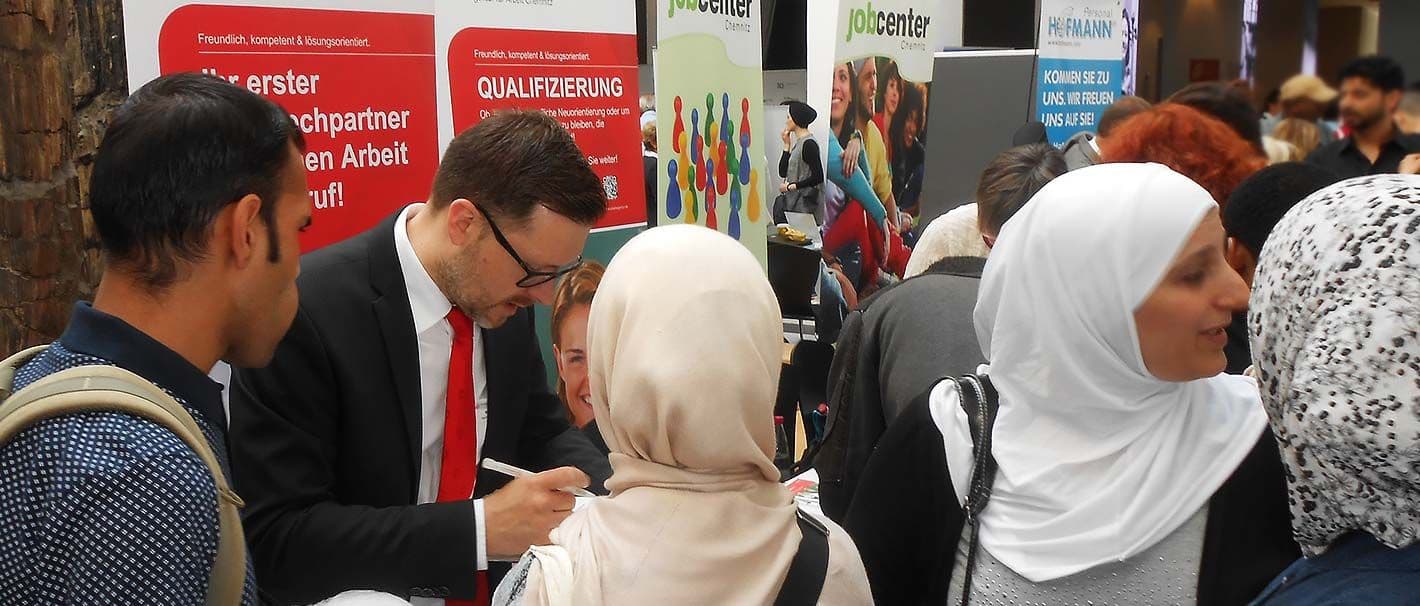
A few refugees get a job soon after they arrived in Germany. However, for most of them labour market integration is still a long way off. Bevor getting a job, many refugees have to learn German and ...read more
 Read more
March 23, 2018 | Groups of Persons
Sabine Klinger, Enzo Weber
The German labour market follows a fascinating employment trend since the year 2005. In contrast, wage growth remained weak until 2010 and although wage dynamics have picked up by now, they remain ...read more
 Read more
December 21, 2017 | Labour Market, Employment and Social Policy
Nicole Gürtzgen, Karsten Hank
Leave policies allowing parents to take time off work after childbirth are considered an important measure to buffer the stresses associated with childrearing and gainful employment. Despite reducing ...read more
