
May 28, 2025 | Interviews
“Xenophobia in Germany’s regions limits the immigration of skilled workers.”
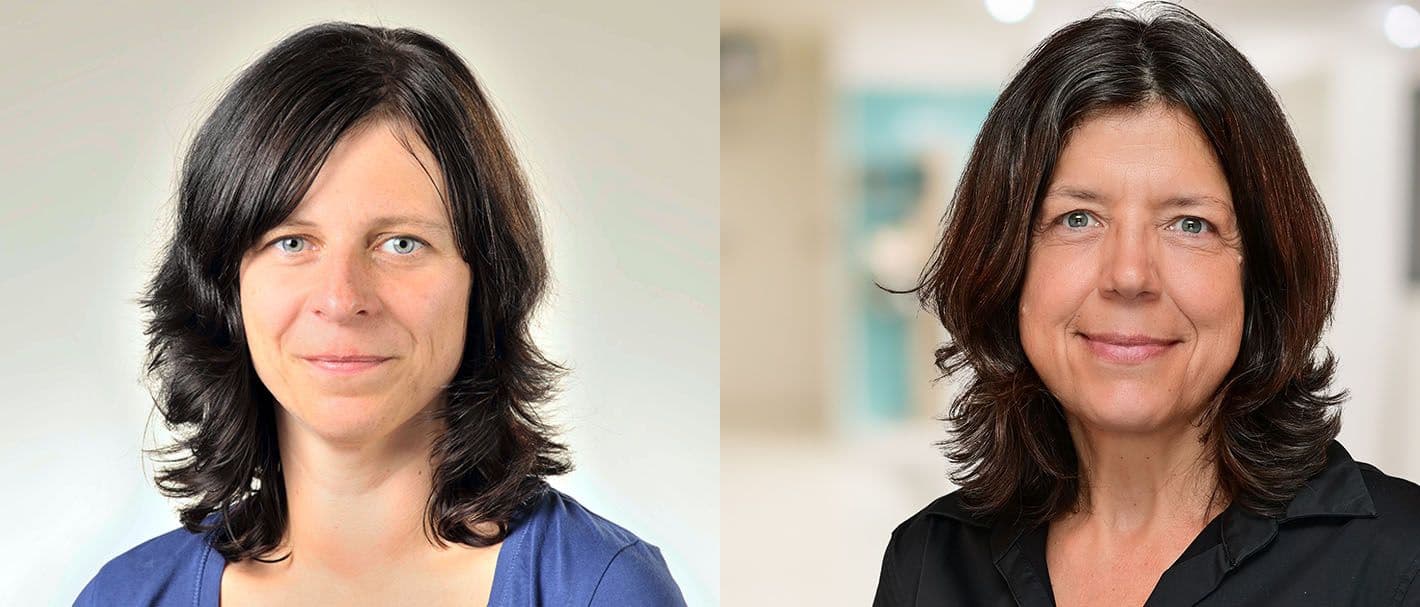
Dr Buch, let's first look at the mobility of workers within Germany: Within the current context of skilled-labour shortages, regions are competing with each other for workers. Do regions with more xenophobic attitudes have a competitive disadvantage?

Tanja Buch: Yes, one can say that. Our results show that workers who move within Germany are less likely to move to regions where xenophobic attitudes are particularly widespread. Young workers and highly-qualified workers react most strongly; they particularly avoid regions where such attitudes are very predominant. This exacerbates a shortage of skilled labour, because young and well-qualified workers are precisely those who are most needed.
Do xenophobic attitudes also cause people to migrate from these regions to other regions?
Buch: Remarkably, this isn’t the case. We actually find a lower emigration rate for German workers in regions where xenophobic attitudes are particularly widespread. However, the decision to move away from one’s home region for a higher level of well-being is linked to many more factors that the choice between moving to one region or another. In addition to the high monetary costs of moving, the non-monetary costs, such as leaving one's circle of friends behind, must be considered. Therefore, we expected to find little or no effect on emigration. We attribute the lower emigration rate of German workers primarily to the fact that a significant proportion of people in these regions hold xenophobic attitudes and therefore see the confrontation with such attitudes in their neighbourhood or at work as a reason to stay rather than to emigrate. But there are also people in these regions who are committed to fighting right-wing radicalism and who consciously decide to stay so as not to leave their home region to the right-wing radicals.
Our results show that foreign workers are indeed responding to xenophobia by moving away more frequently.
Higher levels of xenophobia certainly worsen the quality of life for non-German workers living in those regions. What effects do you observe for this group?
Buch: In contrast to Germans, non-German workers not only have to factor in negative impacts on their social well-being when moving to such regions, but also face immediate confrontation with rejection. Nevertheless, our results for workers with non-German citizenship who move to another region within Germany show that they are even more likely to move to regions where xenophobic attitudes are widespread. However, this finding does not apply to highly qualified workers – possibly because they have more freedom of choice regarding where they live and work. Less qualified foreign workers, on the other hand, may feel compelled to move to these regions if they are offered work there due to their weak position in the labour market. Furthermore, various studies show that higher-skilled workers are generally more critical of xenophobic ideas.
However, our results also show that foreign workers do indeed respond to xenophobia by moving away more frequently. Unlike Germans, they do not appear to take expected well-being into consideration as much when choosing a place to live, but do take negative experiences they have had in a region into consideration. Ultimately, however, only survey data can shed light on the reasons for this.
Dr Burkert, in addition to domestic mobility, in another study you examined whether xenophobic attitudes influence migrant workers’ initial choice of residence. Do you see a connection between anti-immigration attitudes and their choice of residence?

Carola Burkert: Yes. Our results show that xenophobic attitudes in certain regions do indeed reduce the immigration of workers who come to work in Germany from abroad. EU migrants are more sensitive to regional xenophobic attitudes than people from non-European countries.
How do you explain this?
Burkert: We attribute this to two main reasons. First, EU migrant workers – unlike non-EU migrants – enjoy complete freedom of movement within the EU. This gives them much more flexibility in their choice of residence and workplace. The second reason could be that information on the regional prevalence of xenophobic attitudes is not equally available everywhere. Since reporting on this topic tends to decrease with increasing geographical distance, EU migrants are likely to be better informed about where in Germany such attitudes are particularly widespread than people from outside the EU.
A higher level of public support for xenophobic attitudes is particularly characteristic of regions which are already suffering most from demographic change and thus from shortages of skilled labour.
Yet, you say, it is precisely those regions where xenophobic attitudes are particularly prevalent that urgently need the immigration of skilled workers.
Buch: That's true. Higher levels of xenophobic attitudes among the population are particularly characteristic of regions which are already suffering most from demographic change and thus from shortages of skilled labour. They are therefore particularly dependent on new workers. But mobile workers from Germany and abroad avoid these regions precisely because of the attitudes prevalent there.
Burkert: That's a problem because it can lead to or even exacerbate economic and social inequality between regions or even exacerbate it. For historical reasons, this regional inequality is already quite pronounced in Germany. Furthermore, immigration, especially of younger and better-educated people, leads to an exchange of ideas and lifestyles. If this doesn't happen, xenophobic ideas can become more entrenched, and this could further contribute to the polarisation of society.
Our results show that cosmopolitanism – alongside political stability – is an important location factor for Germany.
What should politicians do to counteract this?
Buch: More political education is needed to strengthen democratic awareness, and social work is needed to show young people, especially in rural areas, alternatives to joining right-wing extremist groups. Unfortunately, due to budget constraints, adequate funding for these initiatives is facing constant challenges.
Burkert: Furthermore, it is essential that politicians in affected regions respond and clearly advocate for immigration, tolerance, and diversity. Business associations and companies also have a responsibility. For the sake of their own business-interests they, too, should make clear, where they stand politically: for cosmopolitanism, against isolation. Some are already leading the way, such as Reinhold Würth, Chairman of the Würth Group, who has taken a clear stance for his company. The initiative "Business for a Cosmopolitan Saxony" is also very committed. Its goal is to counteract the poor image of some regions in order to improve their attractiveness as a location. Trade unions should also focus more on this problem. Our results show that cosmopolitanism – alongside political stability – is an important location factor for Germany.
Literature
Buch, T., & Rossen, A. (2024). Who wants to live among racists? The impact of local right-wing attitudes on interregional labour migration in Germany. Journal of Ethnic and Migration Studies, 1–24.
Buch, T., Burkert, C., Hell, S., Niebuhr, A., & Haas, A. (2025): Do xenophobic attitudes influence migrant workers’ regional location choice? PLoS ONE 20(2): e0316627.
picture: IAB
Citation note
Keitel, Christiane; Winters, Jutta (2025): “Xenophobia in Germany’s regions limits the immigration of skilled workers.”, In: IAB-Forum May 28, 2025, https://forum-f.iabpro.de/en/xenophobia-in-germanys-regions-limits-the-immigration-of-skilled-workers/, Accessed: September 7, 2026
This publication is licensed under Creative Commons Attribution-ShareAlike 4.0 International (CC BY-SA 4.0): https://creativecommons.org/licenses/by-sa/4.0/deed.de
 Read more
November 22, 2024 | International and Regional Labour Markets
ELMI Policy Panel: Are labour shortages a problem everywhere?
The 2024 European Association of Labour Economists (EALE) conference gathered leading experts to discuss the latest findings from labour market research. Professor Bernd Fitzenberger organized and ...read more
 Read more
October 23, 2024 | Interviews
Italian citizens’ income: Why the reform cannot be successful in activating people
The Italian government decided on major expenditure saving for the Italian citizens’ income called “Reditto di Cittadinanza” in August 2023. In order to finance promised tax cuts, the payments were ...read more
 Read more
July 1, 2024 | Interviews
“Working on national topics and being part of the international research community go very well together”
Research is increasingly international and benefits greatly from international exchange. The IAB is also becoming more and more international. Yuliya Kosyakova, Head of the IAB's research department ...read more